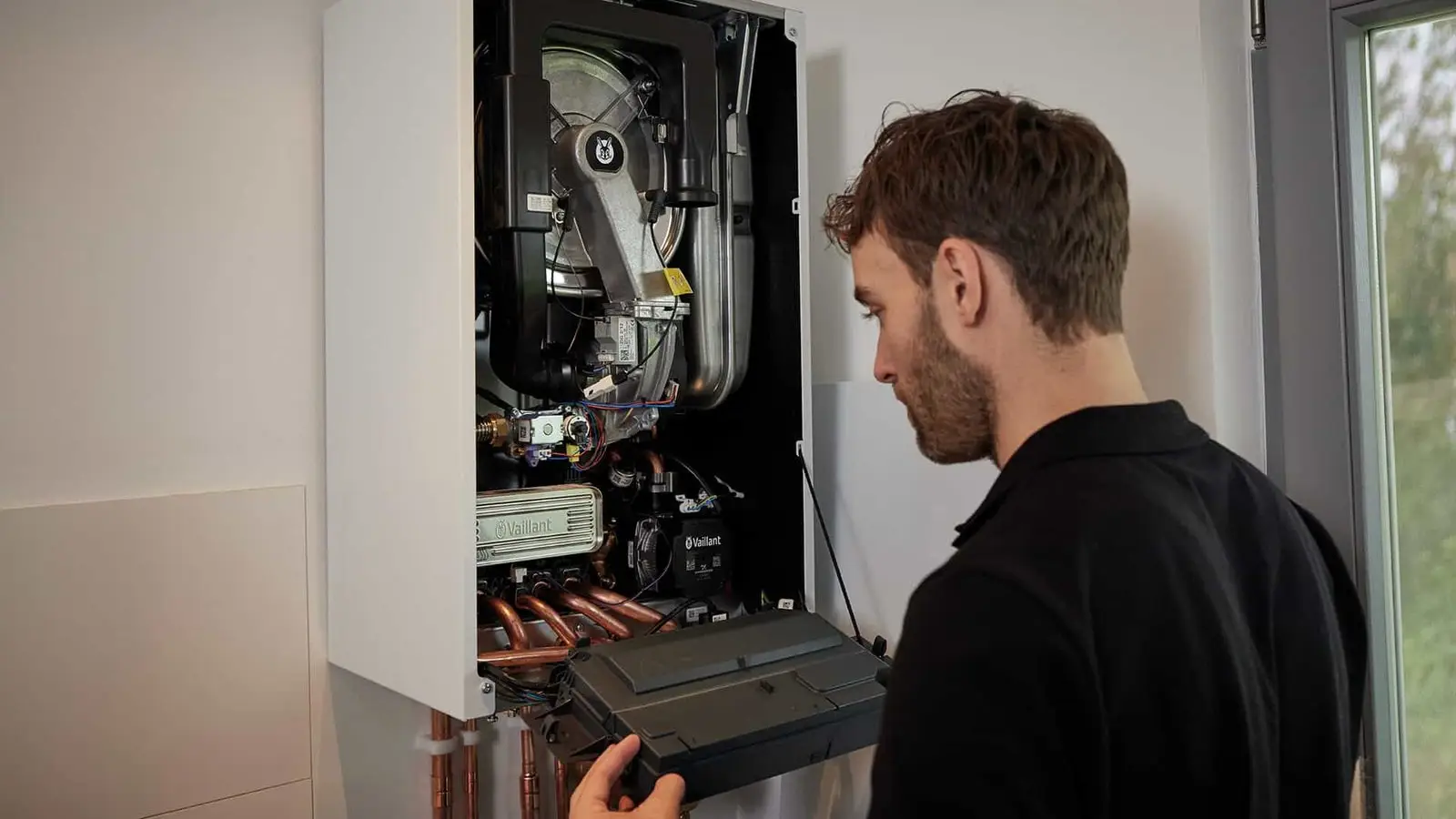
Your boiler has stopped working, the house is getting cold, and a flashing “F23” is staring back at you from the display. It’s frustrating, isn’t it? The Vaillant F23 fault code usually points to a circulation problem—essentially, the temperature difference between the flow (hot water going out) and return (water coming back) is too high. This often means your boiler is overheating or the pump isn’t pushing water around the system effectively.
As experienced heating engineers serving Birmingham and West Bridgford, we see this error frequently. While some causes require a Gas Safe engineer, there are a few simple checks you can do yourself before picking up the phone. In this guide, we’ll walk you through what the F23 code means, potential quick fixes, and when it’s time to call in the experts at Celmeng Plumbing and Heating.
What Does the F23 Fault Code Mean?
Before trying to fix the issue, it is helpful to understand what is happening inside your boiler. The F23 error is a safety mechanism. Your Vaillant boiler uses sensors to monitor the temperature of the water leaving the boiler and the water returning to it.
If the water leaving the boiler is very hot, but the water returning is much cooler, it indicates that the water isn’t circulating properly. The boiler shuts down to prevent the heat exchanger from overheating and causing expensive damage. Common culprits include:
- A blockage in the system (like sludge or debris).
- A faulty pump.
- Air locks in the radiators or boiler.
- Closed isolation valves.
Check Your Isolation Valves
One of the simplest reasons for a Vaillant F23 fault code is that the flow of water is physically restricted. This can happen if the isolation valves underneath the boiler have been accidentally knocked or turned off.
Look at the pipes directly underneath your boiler unit. You should see valves (usually with small levers or slots for a screwdriver). Ensure these are in the “open” position—typically, the handle or slot should be parallel with the pipe. If they are closed (perpendicular to the pipe), the water cannot circulate, causing the temperature to spike and triggering the F23 code. Open them up, reset the boiler, and see if the code clears.
Bleed Your Radiators to Remove Air Locks
Air trapped in your central heating system acts like a barrier, stopping hot water from moving freely. If the pump pushes against an air lock, circulation stops, and the boiler overheats.
How to check for air:
- Turn on your heating and let it run for a few minutes.
- Carefully feel the top of your radiators.
- If a radiator is hot at the bottom but cold at the top, it likely contains trapped air.
How to bleed them:
- Switch off your heating system.
- Use a radiator key to slowly open the valve at the top of the radiator.
- You will hear a hissing sound as the air escapes.
- Once water starts to dribble out, close the valve immediately.
After bleeding the radiators, check your boiler pressure gauge. If it has dropped below 1.0 bar, use the filling loop to top it back up to around 1.5 bar. Reset the boiler and check if the F23 error persists.
Verify Your Boiler Pump is Working
The pump is the heart of your heating system, responsible for pushing water through the pipes. If the pump has seized or failed, the water inside the heat exchanger will boil, but the rest of the system will stay cold.
While you shouldn’t try to dismantle the pump yourself, you can sometimes tell if it’s running. When the heating is switched on, place your hand gently on the casing of the boiler. You should feel a slight vibration from the pump. If the boiler is silent and there is no vibration before it locks out to F23, the pump might be stuck or broken.
If you suspect a pump failure, this is a job for a professional. Our team at Celmeng Plumbing and Heating can inspect, repair, or replace faulty pumps quickly to get your heating back on track.
The Issue of Thermistors and Sensors
Sometimes, the circulation is fine, but the “brain” of the boiler is confused. The thermistors (NTC sensors) are responsible for reading the water temperatures. If these sensors drift out of calibration or fail completely, they might send incorrect readings to the boiler’s printed circuit board (PCB).
For example, the sensor might tell the computer that the temperature difference is huge, even when it isn’t. This will trigger a false F23 code. Testing sensors requires a multimeter and specific knowledge of resistance values, so this is definitely a task for a qualified Gas Safe engineer.
When to Call a Professional Gas Engineer
While bleeding radiators and checking valves are safe DIY tasks, you must never remove the casing of your boiler. This exposes you to gas, fumes, and live electricity.
If you have tried the steps above and the Vaillant F23 fault code remains, or if the boiler makes banging noises (kettling), it is time to call expert help. The issue could be a blocked heat exchanger, significant sludge buildup requiring a power flush, or internal component failure.
At Celmeng Plumbing and Heating, we specialise in Vaillant diagnostics and repairs. We serve the entire Birmingham area, providing fast, safe, and reliable solutions to get your home warm again.
Don’t let a fault code leave you in the cold. If you can’t clear the error, contact us today on 0121 608 0460 or visit our website to book a repair.